

Living in Palau, I had the opportunity to develop the communications strategy for the Our Ocean Conference, an annual global conference dedicated to bringing governments, industry leaders, civil society, and more to commit to safeguarding our ocean. I had always identified as a climate advocate, but I learned just about a lifetime of knowledge from working within the marine conservation communications space. This made me realize that if I didn’t know this much, what else does everyone not know?
I had to “get smart quick” on marine and environmental conservation to develop a global communications strategy from Palau’s perspective. This post highlights five key takeaways from immersing myself in the ocean and climate justice space.
I will touch upon the following:

What do you think of when you hear the phrase climate change? Do you think of changes in temperature or changes in weather patterns? Or maybe, you think of the “melting ice is causing sea levels to rise” narrative? Whichever topics or phrases come to mind, do they ever include the ocean? For an easy-to-read breakdown of climate change and its effects on our lives, check out this post by the United Nations.

Since grade school, we were taught that the ocean covers around 70% of the earth's surface, but did we ever honestly think about it? I believe this must be repeated throughout ocean conservation’s social platforms. Again, the places I’ve lived did not empower me to learn more about oceans, but in Palau, I’ve seen some of the weirdest, coolest, and prettiest marine life I never knew existed.

- The Ocean is Absolutely Related to Climate Change
- Island Nations (Like Palau) Rely on the Ocean
- The Ocean is Out of Sight, Out of Mind
- The Ocean is Only About 80% Discovered
- Corals Are Very Much Alive - and Not Thriving

1. The Ocean is Absolutely Related to Climate Change
What do you think of when you hear the phrase climate change? Do you think of changes in temperature or changes in weather patterns? Or maybe, you think of the “melting ice is causing sea levels to rise” narrative? Whichever topics or phrases come to mind, do they ever include the ocean? For an easy-to-read breakdown of climate change and its effects on our lives, check out this post by the United Nations.
I had no marine science knowledge, but I did understand that burning fossil fuels (such as oil, coal, and gas) are causing global temperatures to shift. And this has been slowly happening since the Industrial Revolution (the early 1800s). The Our Ocean Conference seeks to shift the narrative about climate change and focus more on how the ocean is a solution to climate change.
So do these gases just sit in the atmosphere? Not quite. The ocean actually absorbs the trapped gas and additional heat. The International Union for Conservation of Nature (IUCN) has an excellent brief explaining why the ocean is disproportionately affected by climate change. The brief explains that the ocean is essential in regulating the Earth’s climate. IUCN also cites scientific studies on ocean warming and dives deeper into the catastrophic effects on the ocean, marine life, and human vulnerabilities.

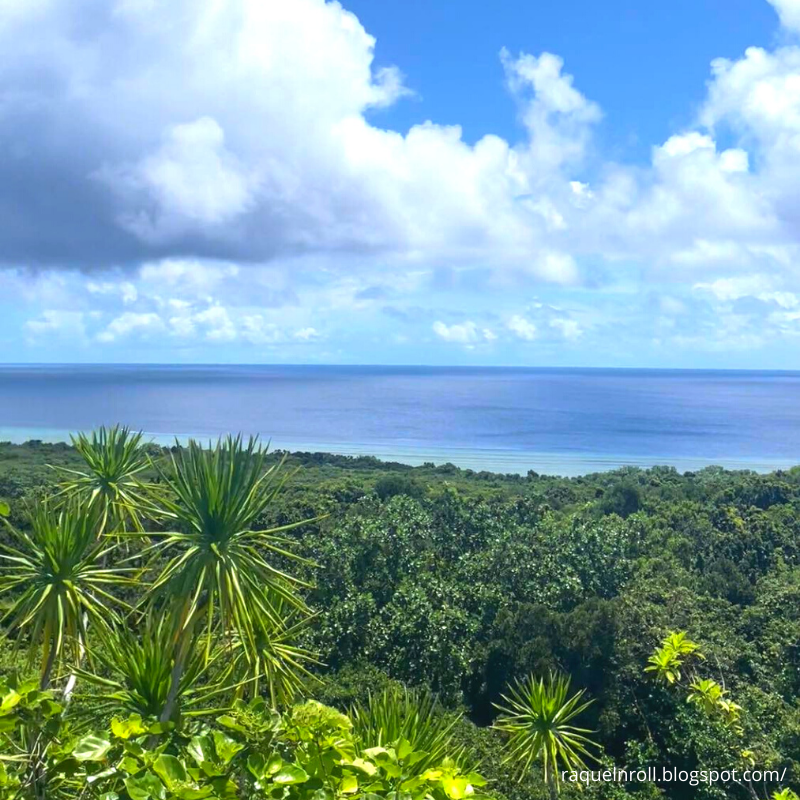
In Palau, the ocean is life. Because islanders rely on the ocean for sustenance, climate change is not only changing temperatures throughout the world but is actively attacking a way of life. Living in Palau, I’d see folks fishing nearby or hear folks talk about the fish they caught over the weekend. I was spoiled at the local fishery because I could purchase freshly caught fish (hello, red snapper!) and have it cleaned, filleted, and ready for cooking.

2. Island Nations (Like Palau) Rely on the Ocean
In Palau, the ocean is life. Because islanders rely on the ocean for sustenance, climate change is not only changing temperatures throughout the world but is actively attacking a way of life. Living in Palau, I’d see folks fishing nearby or hear folks talk about the fish they caught over the weekend. I was spoiled at the local fishery because I could purchase freshly caught fish (hello, red snapper!) and have it cleaned, filleted, and ready for cooking.
Palauans and other islanders rely on the ocean for food. Sure, other food sources are available, but the ocean provides a plethora of fish for frying, smoking, or storytelling. Food scarcity increases if the ocean is warming, causing species migration patterns to change or causing ecosystems to die off. In addition to decreased resources, rising tides, and bad weather, climate change can cause millions of dollars in damage and ultimately displace people from their homes. In April 2021, Typhoon Surigae struck Palau and caused devastating damage. Palau had not experienced such a powerful typhoon since 2013.
In addition to how the ocean provides livelihoods, Palauans are also deeply connected to the ocean. There is a Palauan legend that states Palauans came from the ocean. Throughout Palauan folklore, the ocean is almost always included in the stories from a giant named Uab (pronounced oo-wab) who fell into the ocean creating Palau, or the woman who jumped into the sea and became a dugong. These stories highlight how the ocean is centered around island life. It is stressful for vulnerable island populations and communities to fathom a life without being able to connect to your livelihood, especially when your livelihood is constantly and more consistently under threat.


3. The Ocean is Out of Sight, Out of Mind
I saw the ocean every single day in Palau. When I drove to work, I would see the ocean. After work and on the weekends, I would swim in the ocean. My home in Palau was minutes away from the ocean. In Palau, the ocean became an integrated part of my daily life because it was readily available. During my research phase, where I learned that climate change is exhausting the ocean, I remember thinking, “Why don’t more people care about this?” My follow-up realization was, “Ahh. Geography.”
Your lifestyle is an extension of how and where you were raised. I grew up in La Habra, CA, a city roughly 20 miles (about an hour’s drive) inland from the pacific ocean. I then lived in Washington, DC, roughly 120 miles (about a two-hour drive) inland from Ocean City, MD, a popular beach city to relax and unwind. Living in American cities, you are constantly barraged with capitalism and consumerism where trivial things like from which franchise should I purchase my morning cup of coffee become a part of your daily routine.
There isn’t a huge concern about rising tides infiltrating one’s home in landlocked states. Instead, we are concerned about saving electricity, saving water, and recycling (I’m looking at you, California). While these actions contribute to resource management and environmental conservation efforts, they leave out the ocean. Americans simply don’t think about marine conservation because the country is landlocked, except for the west and east coast, which includes 20 out of 50 states, not including territories like Guam.
Is this selfishness? Yes, in part. Many people couldn’t point out Palau on a map if their lives depended on it. It is human nature to not think about what we don’t see (the very reason I hide ice cream in the back of the freezer). Island nations like Palau are taking the brunt of climate change due to more affluent countries’ actions. Check out this Time article by Palau President Surangel S. Whipps, Jr. shedding light on how richer countries should be held accountable for the climate crisis.

4. The Ocean is Only About 80% Discovered
Since grade school, we were taught that the ocean covers around 70% of the earth's surface, but did we ever honestly think about it? I believe this must be repeated throughout ocean conservation’s social platforms. Again, the places I’ve lived did not empower me to learn more about oceans, but in Palau, I’ve seen some of the weirdest, coolest, and prettiest marine life I never knew existed.
I learned that the ocean is still not fully discovered and mapped, which means there are unknown species, ecosystems, and more. According to National Geographic, roughly 80% of the ocean has never been explored because our technology doesn’t allow us to dive too deep. I had the opportunity to talk with folks from the Palau International Coral Reef Center (PICRC), a non-profit dedicated to local and national marine research and conservation. PICRC has technology for deep water research and shared underwater footage of creatures at 620 meters deep (just over 2000 feet). It is unclear how long the camera remained at this depth, but this location captured footage of a Chaceon crab and provides invaluable insight into marine life and behavior.
It is astonishing to think that undiscovered creatures within the ocean are suffering or no longer exist. If we knew more about the ocean and the species living within, we might be better equipped to understand and end the ocean climate crisis. Because there are several unknowns about the ocean floor, geography, marine life, ecosystems, and more, it is crucial to invest in ocean science and technology like cameras and scuba gear that can withstand water pressure several thousand meters deep.
It is astonishing to think that undiscovered creatures within the ocean are suffering or no longer exist. If we knew more about the ocean and the species living within, we might be better equipped to understand and end the ocean climate crisis. Because there are several unknowns about the ocean floor, geography, marine life, ecosystems, and more, it is crucial to invest in ocean science and technology like cameras and scuba gear that can withstand water pressure several thousand meters deep.

5. Corals Are Very Much Alive - and Not Thriving
When I first visited a nearby beach in Palau, I immediately noticed grey, crusty-looking rocks that seemed to wash up in bulk with the tides. Some were sharp, and most were tubular in shape. I remember thinking, “why is the beach covered in this?” I later found out that I was stepping on a graveyard of corals. Due to climate change, the world’s coral reefs are under threat of completely disappearing.
In the past 50 years, coral bleaching has been a growing cause of death to the world’s most vibrant coral reefs. Corals are actually classified as animals and share a symbiotic relationship with algae. When coral is stressed, algae is expelled, resulting in starvation. Stressors include significant environmental changes caused by climate change, such as heat, pollution, or too much direct sunlight. Not all bleached coral is dead, but prolonged stress and starvation lead to death. The World Wildlife Fund shares the basics of coral bleaching in this article.


Summary
Before my employment, I thought corals were plants and mainly ornamental. I also thought climate change only affected the weather and temperature. Now, I fully understand the importance of coral’s role within the ocean and climate change through islander perspectives. I am probably one of only eight people in America who can point to Palau on the map, and I am proud of that. I take Palau with me everywhere I go because I am more knowledgeable about marine conservation, marine protected areas, marine pollution, and, frankly, the underreported threats of climate change on humanity.
Thank you, Palau.
With love,
Raquel
Thank you, Palau.
With love,
Raquel



.png)